Evidence in Action
Washington State Compost Test
Third Party Laboratory Testing
The Clean Soil Coalition in 2025 conducted independent, third-party product quality testing through a Washington state laboratory in an effort to verify public concerns over compost byproduct quality.
Compost bag (1 cubic foot each) samples from prevailing brands were randomly selected from local hardware stores in Seattle and Southwest Washington, respectively, and sent for testing by Soiltest Farm Consultants, Inc, in Moses Lake, WA.
This is the same testing lab that Washington state's Department of Ecology uses for its own organic product testing.
Results:
The compost samples from Southwest Washington passed Ecology's existing limit for physical contaminants, while the Seattle area sample significantly exceeded Ecology's existing limit for physical contaminants. The Seattle area sample exceeded both physical contaminants and plastics limits.
- The current state compost limits for physical contaminants is 1%, and this sample was 40% above the physical limit at 1.41%.
- The current state compost limit for plastics is 0.25%, and this sample's plastic was measured at 1.41%, or nearly 6 times the state's allowable plastic level.
- If a result is more than 0.1%, then the composter is required to provide a product label info sheet disclosing to customers that it exceeds this amount. This product marketed itself as "OMRI (Organic) Certified" and did not have any disclosure label about plastic — despite having a plastics limit that's over 14 times higher than the threshold that triggers this disclosure.
The Results
Particle Size Distribution (TMECC 2.02 B & C)
| Inches | mm | % Passing |
|---|---|---|
| 3 | 76.2 | 100 |
| 2 | 50 | 100 |
| 1 | 25 | 100 |
| 3/4 | 19.1 | 100 |
| 5/8 | 16 | 99 |
| 1/2 | 12.5 | 96 |
| 3/8 | 9.5 | 88 |
| 1/4 | 6.3 | 53 |
| Inerts | % by wt. |
|---|---|
| Total Plastic | 1.41 |
| Film Plastic | 0.00 |
Sample was received, handled, and tested in accordance with TMECC procedures.
Independent Verification
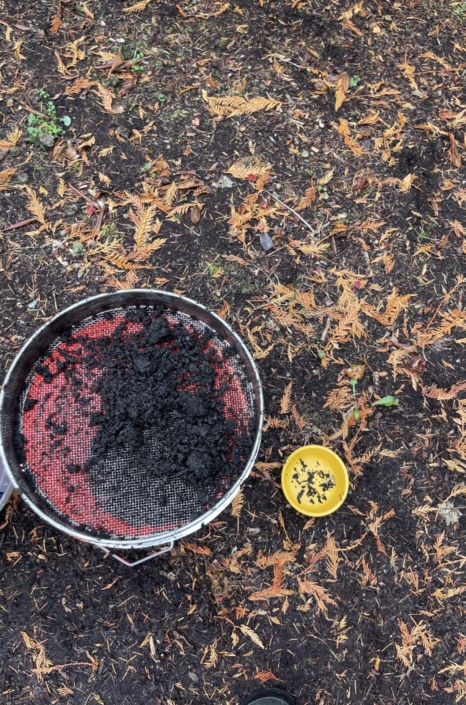
Using simple sifting screen tests, Clean Soil Coalition staff measured the physical contamination levels of our own matched selection of compost bags.
Results were consistent with the laboratory findings. The compost product from Southwest Washington had undetectable amounts of contamination. The compost product from the Seattle area had consistently high amounts of contamination throughout each bag that was screened. We measured approximately one cup of various contaminants, including glass and plastic fragments, per each bag. To account for the possibility of an outlier test result, we sift tested multiple bags of compost and consistently found physical contaminants in the Seattle area compost product.
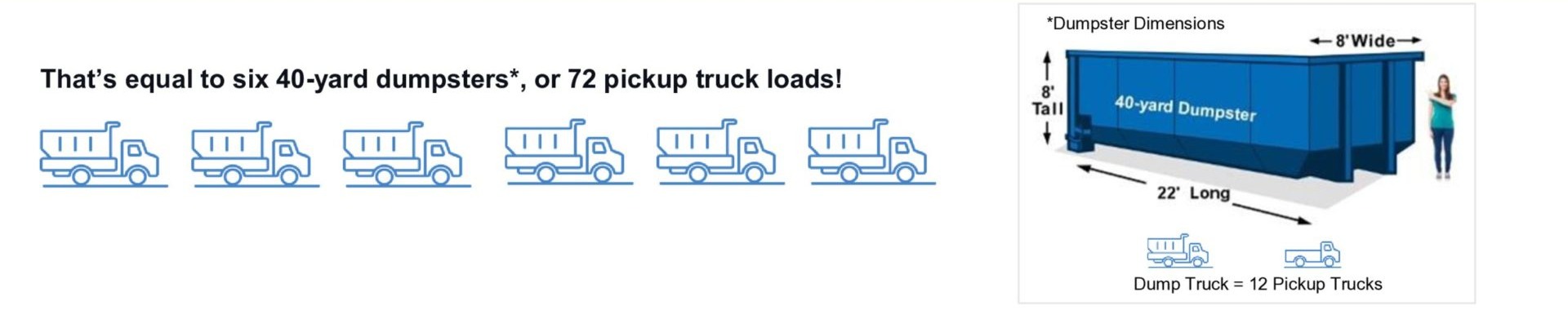
One cup of contaminants per cubic foot of compost can add up when it is land applied in great quantities. Land applying this compost across a typical 445-acre farm would be the equivalent of micro-landfilling the farmland with 240 cubic yards of contaminants — or six 40-yard dumpsters full of plastic, glass, and metal contaminants.
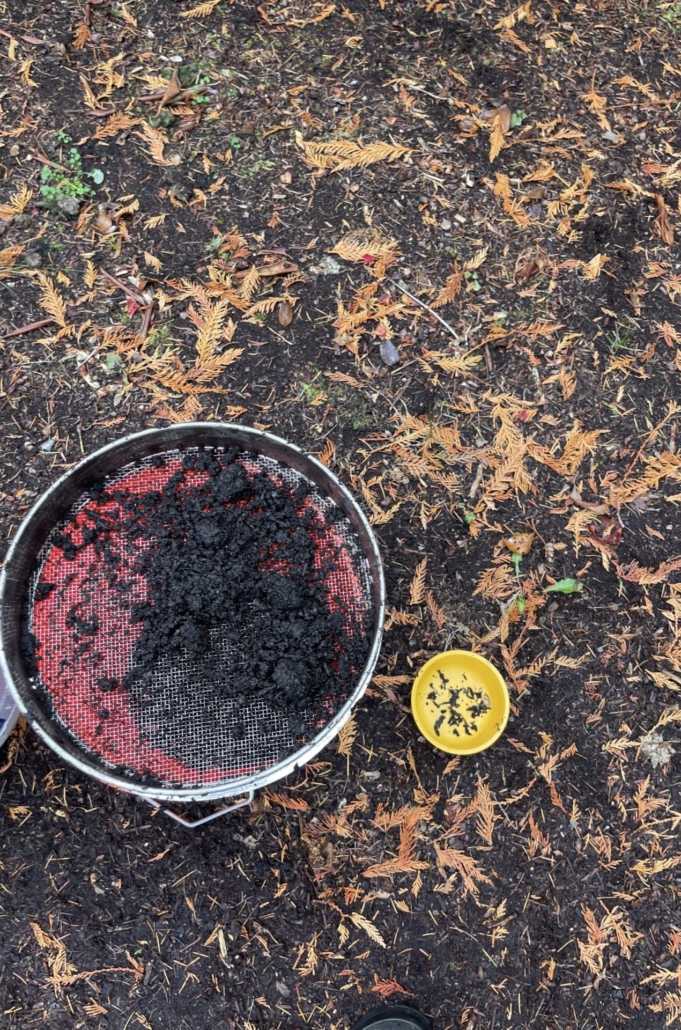
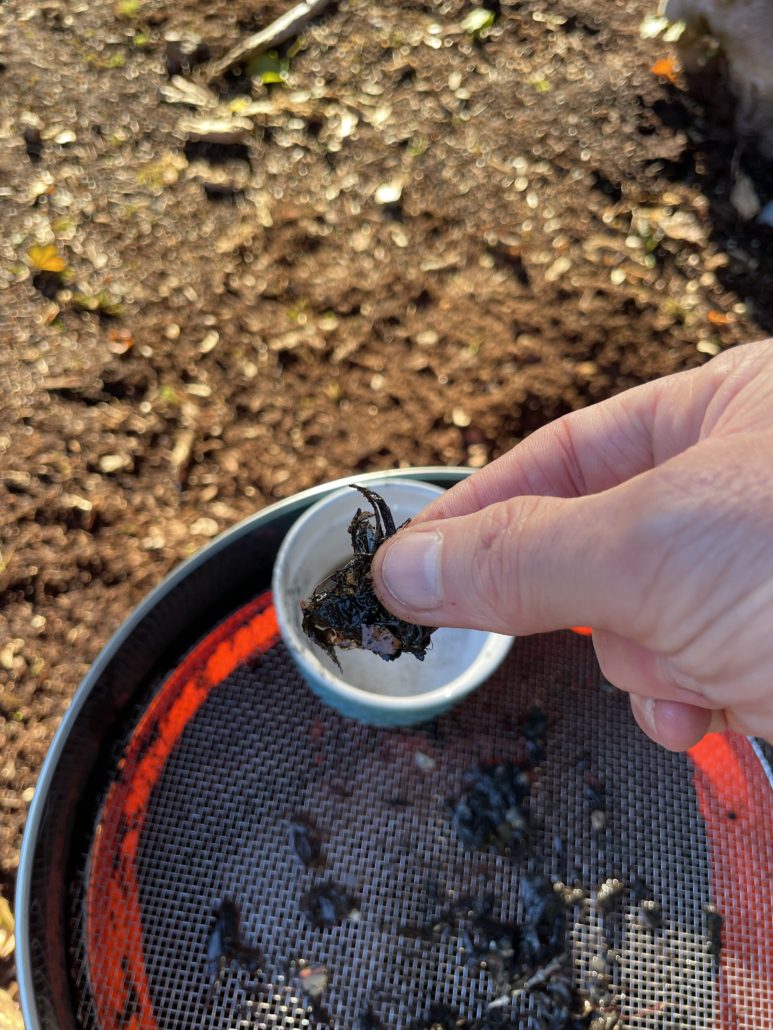
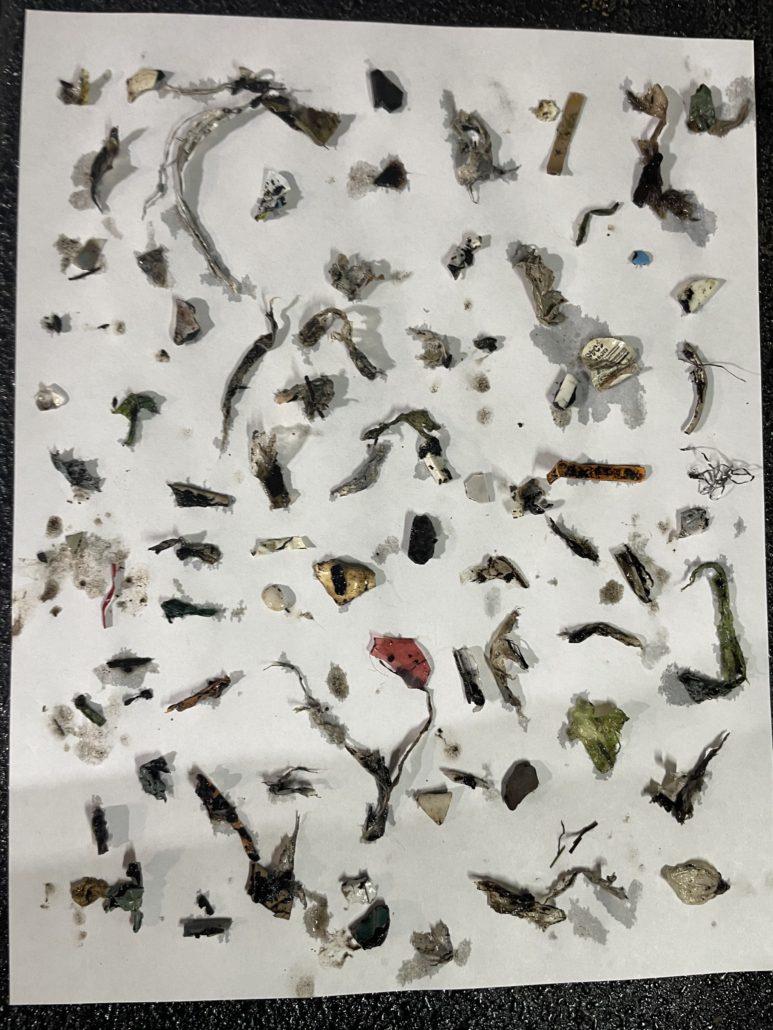
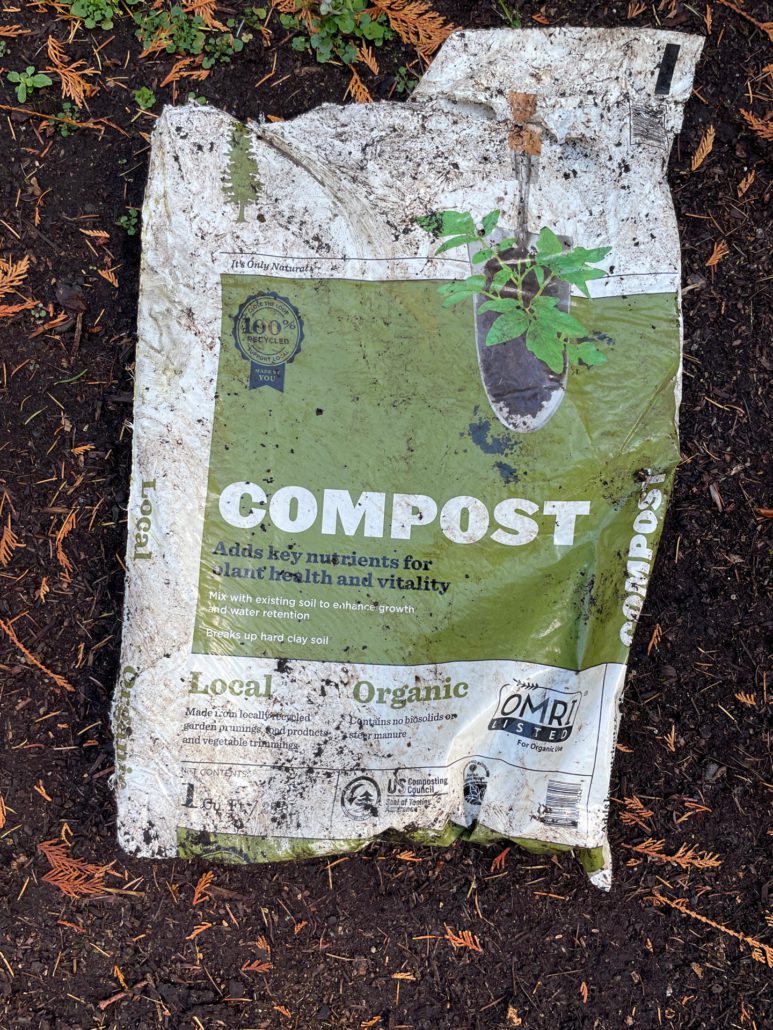
One Cubic Yard of Compost Contained One Cup of Contaminants
1 Cubic Foot
(1 bag)
1 Cup of
Contaminants
Implications of Minor Contamination When Scaled Up
This seemingly small amount of contamination may appear insignificant, but it raises serious concerns when scaled up.
Scaling Up the Problem
Assuming the same ratio of contamination as our backyard test, applying compost across the average farm would mean distributing 240 yards of contaminants.
| Coverage | Compost | Contaminants |
|---|---|---|
| 1 acre | 65 cubic yards | 0.5 cubic yards |
| 445 acres(Avg US Farm Size) | 28,925 cubic yards | 240 cubic yards |
That's equal to six 40-yard dumpsters, or 72 pickup truck loads!